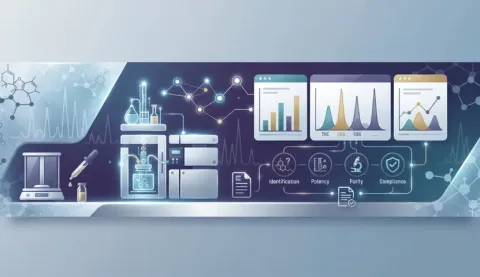
A certificate of analysis (COA, sometimes called a test report) is the document in which an independent laboratory states what a batch of product contains. It is the best evidence available for comparing two hemp products, provided you know how to read it. Here are the five points to check, in order.
1. Who carried out the analysis?
The lab's name, address and contact details should appear on the document. Also look for an accreditation statement (for example COFRAC, the ISO 17025 standard). An accredited lab follows audited procedures, but a lack of accreditation does not make a report false: it simply means the method is less checked from the outside. A certificate with no lab name is of no use.
2. Does the certificate match your product?
Check the product name, the batch number and the date of analysis. A report more than a year old, or one with a different batch number from the one on the packaging, proves nothing about the product you are buying. Reputable shops publish the report for the batch on sale, or at least the one for the latest harvest.
3. Reading the cannabinoid profile
The table lists the molecules measured, as a percentage of mass (or in mg/g). The rows to look for:
- CBD and CBDA: CBDA is the acid form, found in the raw plant.
- THC (or delta-9-THC) and THCA: THCA is the acid form of THC.
- The other rows (CBG, CBN, CBC...) are additional information.
4. Total THC, the line that matters
THCA converts into THC when heated. That is why a total THC figure is calculated:
Total THC = THC + (0.877 × THCA)
A report that only shows "delta-9-THC" below 0.3% can therefore hide a higher total THC. Always compare total THC with the legal limit in force in your country (0.3% in France). The same calculation exists for CBD: total CBD = CBD + (0.877 × CBDA). This is the value that allows an honest comparison between two flowers.
Our total THC calculator does this calculation from the values on the report, and our interactive certificate of analysis guide explains each section of a sample report. To understand the gap between the two THC values, also read Total THC or delta-9-THC: which value should you look at?
5. The method and the limits of the analysis
A serious analysis states the method used (most often liquid chromatography, HPLC) and the measurement uncertainty. Also look for entries marked "below the limit of quantification" (LOQ): they mean the molecule is present in too small an amount to be measured accurately. Full reports sometimes include other sections (heavy metals, pesticides, residual solvents): where they exist, they are a real sign of quality.
Common mistakes
- Settling for a screenshot with no lab name.
- Comparing one product's "total" CBD percentage with another product's "plain" CBD figure.
- Ignoring the date and the batch number.
- Confusing the certificate for a raw material with the one for the finished product.
How we use certificates
On this site, the "data" part of the score only counts points from the certificate when the report is published and verified. A product whose data is only declared by the brand is flagged as such. Our full method is described on the methodology page.
This site makes no health claims. The hemp products featured are not intended for use as food and are for adults only.